Thinking about flipping a house in Franklin? The numbers can look great at first glance, but this is a market where a deal can go from promising to thin very quickly. If you want to evaluate a Franklin fix-and-flip with more confidence, you need a local, property-specific approach to value, costs, and resale timing. Let’s dive in.
Start With Franklin Reality
Franklin does not have one simple price point for flips. Current market snapshots show a wide range depending on the source, which is your first sign that you should treat citywide averages as a starting point, not a pricing plan.
For May 2026, Realtor.com reported a median listing price of $225,000, a median sold price of $303,000, 124 active listings, $175 per square foot, and a median 32 days on market. Zillow’s Franklin data from May 31, 2026 showed an average home value of $269,504, a median sale price of $267,050, a median list price of $261,983, 53 for-sale listings, and a median 8 days to pending.
Those numbers are useful, but they do not tell you what your finished property will sell for. In Franklin, the spread between product types is wide enough that a rough city average can easily lead you to overpay.
Price By House Type
The biggest mistake in a Franklin flip is assuming one comp set fits every property. Recent sales show that homes with similar bedroom counts can still land in very different price tiers based on size, age, finish level, and location within the city.
Here are a few recent examples that help frame after-repair value, or ARV:
- 1012 Gribble Dr: 3 bed, 2 bath, 1,674 square feet, sold January 15, 2026 for $170,000, or about $102 per square foot
- 430 Central Ave: 4 bed, 2 bath, 1,616 square feet, sold October 3, 2025 for $240,000, or about $149 per square foot
- 4385 Harvest Ln: 3 bed, 2 bath, 1,692 square feet, sold April 6, 2026 for $265,000, or about $157 per square foot
- 4100 Beal Rd: 3 bed, 2 bath, 2,003 square feet, sold March 23, 2026 for $394,900, or about $197 per square foot
- 7900 Timberview Ct: 3 bed, 2.5 bath, 2,406 square feet, sold in 2026 for $400,000, or about $166 per square foot
That range matters. A 3-bedroom, 2-bath home around 1,650 to 1,700 square feet might land in the mid-$100,000s or the mid-$200,000s, while larger or newer homes can push toward $400,000.
Use Similar Sales Only
When you comp a Franklin flip, pull 3 to 6 sold homes that closely match the subject in:
- Bedroom and bathroom count
- Square footage
- Age and style
- Condition before sale
- Subdivision or immediate area
Then compare sold price per square foot, not just headline price. That helps you avoid mixing very different homes into one ARV estimate.
Watch Out For False Comps
Public real estate portals can blur lines in Franklin. Some 45005 listings and sales may pull in nearby properties from Franklin, Carlisle, or Franklin Township, even when they are not true apples-to-apples comparisons.
Before you rely on any comp, confirm the parcel, tax district, and subdivision. The Warren County Auditor search tool lets you verify a property by address, parcel ID, account number, subdivision, lot, or owner name, which makes it a practical step before you write an offer or finalize value.
Why Verification Matters
If your comp is in a different tax district or subdivision, your resale estimate may be off from the start. In a deal with narrow margins, that kind of mistake can erase your profit before the rehab even begins.
Build A Full Deal Model
A flip should never be underwritten on purchase price and rehab alone. In Franklin, carrying costs and resale assumptions can make a meaningful difference, especially if the project takes longer than planned.
Your model should include:
- Purchase price
- Rehab budget
- Financing costs
- Insurance
- Property taxes
- Utility and maintenance costs during the hold
- Closing costs
- Resale costs
If the deal only works with best-case assumptions, the margin is probably too thin.
Use Actual Parcel Taxes
Warren County does not support a one-size-fits-all tax guess. The county appraises real estate at fair market value, taxable value is 35% of appraised value, and the county follows a six-year reappraisal cycle with a triennial update between cycles. The next reappraisal is in 2027.
The tax lien date is January 1 for taxes payable the following year, and the county also values new construction and changes in use annually. For a flip, that means you should base your holding costs on the current parcel record and current tax bill, not a broad rule of thumb.
Recent examples show why this matters:
- 1012 Gribble Dr showed 2025 taxes of $3,413
- 4100 Beal Rd showed 2024 taxes of $3,985
Those tax bills may not kill a deal on their own, but combined with financing, insurance, and a longer hold, they can materially change your return.
Be Conservative On Resale Timing
One of the easiest ways to overestimate profit is to assume a finished home will sell immediately. Franklin’s market has moved quickly in some data sets, but not every source shows the same pace.
Realtor.com reported a median 32 days on market in May 2026, while Zillow reported a median 8 days to pending. That gap is another reminder to rely on fresh, same-product comps instead of one market headline.
What This Means For Your Timeline
If you are flipping a smaller, dated ranch, use recent sales of similar homes to estimate your likely days on market. If you are renovating a larger or newer property in a higher price tier, build extra time into your carry model unless the closest sold comps prove otherwise.
A realistic exit window protects you from turning a decent deal into a stressful one.
Scope Renovations With Permits In Mind
Not every rehab is purely cosmetic. Ohio’s residential building code applies to the repair and alteration of existing residential buildings in certified jurisdictions, and local departments enforce that code.
Ohio law allows non-architects to file certain permit applications for residential buildings and for some replacement equipment or minor modifications when the building official determines that no plans or specifications are needed. Still, the practical takeaway is simple: do not assume your Franklin flip is permit-free just because it is a rehab.
Separate Cosmetic From Permit Work
Ask your contractor to break the scope into two buckets:
- Cosmetic work, such as paint, flooring, fixtures, and finish updates
- Permit-triggering work, such as changes that may involve structural, mechanical, electrical, or other code-related review
This helps you build a budget based on the real scope of work instead of hope.
Check Floodplain Risk Early
Some Franklin properties may fall wholly or partly within a special flood hazard area. If they do, the city’s local floodplain rules can affect your timeline, cost, and renovation plan.
Franklin requires a Floodplain Development Permit before construction, alteration, remodeling, or expansion in those areas. The application may require site plans, elevations, technical analysis, a fee, and city review and inspections.
Why This Matters Before The Offer
Floodplain review is not something you want to discover after work starts. If the lot has floodplain exposure, check the permit path before you buy so you can account for possible delays, added scope, or limits on the project.
Match The Finish Level To The Ceiling
Franklin buyers appear to reward clean presentation, usable outdoor space, and practical features. Recent sale examples suggest that items like a newer roof, updated outdoor space, and strong overall livability can help support value.
But every house has a ceiling tied to its age, size, and submarket. That means your renovation should aim to meet the market, not outspend it.
Avoid Over-Improving
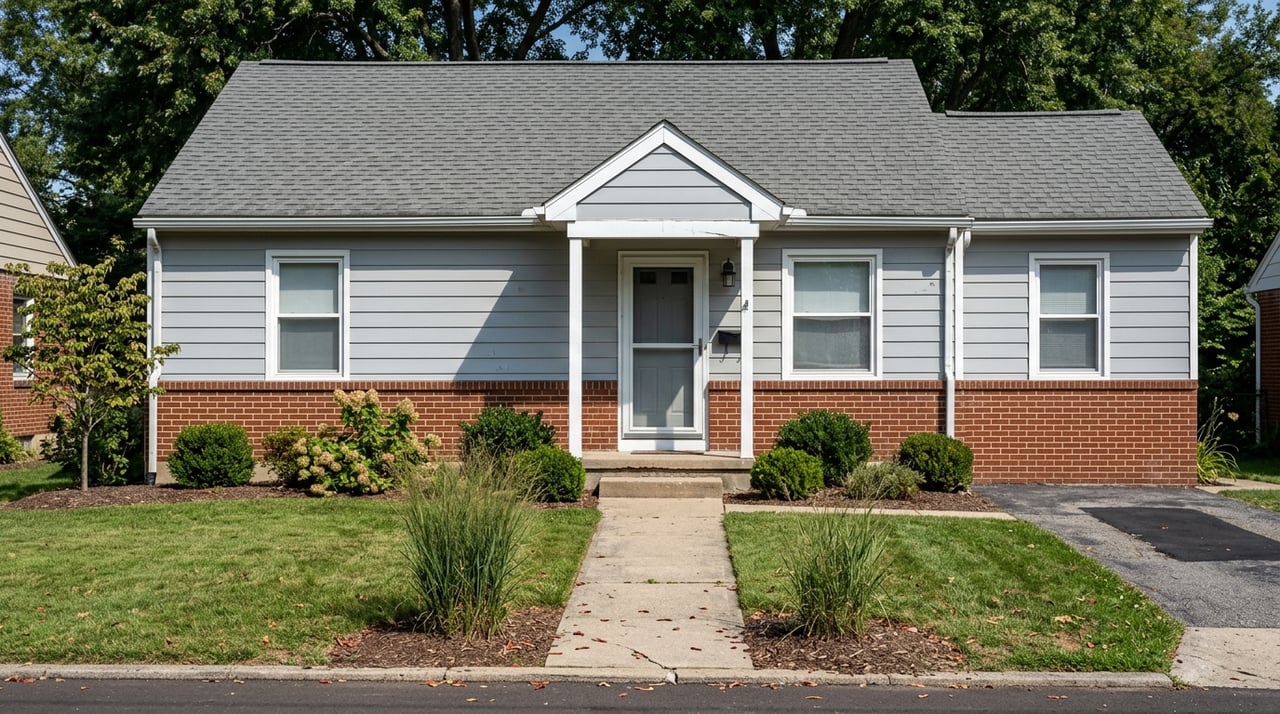
If you are flipping a modest 1970s ranch, the right plan may be clean, durable, and well-finished rather than high-end. If nearby sold homes with similar size and layout top out in the mid-$200,000s, a luxury-level budget may not come back at resale.
The goal is simple: create a finished product that feels sharp, functional, and market-ready for that specific Franklin price tier.
A Franklin Offer Checklist
Before you write an offer on a Franklin fix-and-flip, run through this checklist:
- Verify the parcel in the Warren County Auditor search.
- Pull the sales history, assessed value, and tax data.
- Build a comp set from recent Franklin sales with similar size, age, and condition.
- Confirm that your comps are truly in Franklin and in the correct subdivision or tax district.
- Check whether the lot is in a special flood hazard area.
- Separate cosmetic rehab from permit-triggering work.
- Underwrite current parcel taxes and realistic carrying costs.
- Use a conservative exit price based on the closest sold comps.
- Make sure the deal still works after rehab, hold, and resale costs.
If the margin disappears when you use careful assumptions, walk away. In Franklin, the spread between an average resale and a strong resale is wide enough to punish thin deals.
Final Takeaway
A good Franklin fix-and-flip deal is not just about buying low and renovating fast. It is about comping the property correctly, verifying the parcel data, budgeting for real holding costs, and respecting local permit or floodplain issues before they become expensive surprises.
If you stay conservative on ARV, realistic on timing, and disciplined on scope, you give yourself a much better chance of finding deals that actually hold up. And if you want a local read on Franklin pricing, resale potential, or how a property fits the current market, Meghan Dwyer can help you evaluate the opportunity with a practical, straightforward approach.
FAQs
How do you estimate ARV for a Franklin fix-and-flip?
- Use 3 to 6 recent sold comps in Franklin that closely match the property’s bed and bath count, square footage, age, condition, and location, then compare sold price per square foot rather than relying on a citywide median.
Why are Franklin home values so different from one sale to another?
- Recent Franklin sales show clear pricing tiers, with similar homes selling at very different levels based on size, finish quality, age, and submarket, so one average market number rarely tells the full story.
What public records should you check for a Franklin flip property?
- Check the Warren County Auditor record to verify the parcel, tax district, subdivision, sales history, assessed value, and current tax data before using the property in your underwriting.
Do Franklin rehab projects always need permits?
- Not always, but Ohio’s residential building code applies to repair and alteration work, so you should not assume a rehab is permit-free without confirming the scope with the proper local authority.
Why should you check floodplain status before buying a Franklin flip?
- Franklin requires a Floodplain Development Permit for construction, alteration, remodeling, or expansion in identified special flood hazard areas, which can affect cost, scope, and timeline.
How should you budget holding costs for a flip in Franklin?
- Use the current parcel’s actual taxes, plus financing, insurance, utilities, maintenance, closing, and resale costs, because broad estimates can understate the true cost of carrying the project.